
Can Singapore life insurers sustain growth as premiums slow?
Health insurance premiums surged 66.5% in the first half of 2026.
Singapore's life insurance premium growth is expected to slow to as much as 9% in 2027 from 17% this year, as rising healthcare claims threaten profitability despite strong demand for retirement and investment products, according to S&P Global Ratings.
“Most Singapore life insurers continue to manage a large, asset-heavy in-force portfolio of traditional insurance products,” the rating company said in an October report. “Therefore, a significant capital challenge remains.”
S&P expects growth to slow in 2027 because of the high base in 2026 and a return to economic growth rates. Still, it expects insurers to maintain strong capitalisation and healthy profitability.
Total weighted first-year business premiums rose 21.4% year on year to $2.8b (S$3.6b) in the first half, according to the Life Insurance Association of Singapore.
Integrated Shield Plan and rider premiums rose 66.5% to $78.4m (S$100.3m), whilst investment-linked products accounted for 44% of weighted first-year business premiums, or $1.24b (S$1.59b).
S&P expects demand for retirement income solutions and long-term care coverage to increase as Singapore's population ages.
The city-state's total insurance premiums reached $44.6b (EUR39.7b) in 2025, according to Allianz Research. Life insurance accounted for $37.6b, followed by property and casualty insurance at $4.2b and health insurance at $2.8b.
Premiums represented 7.6% of gross domestic product, whilst average spending reached $7,593 per person, Allianz said in a May report.
“We expect an increase in private healthcare claims to continue to compress the margins of health insurance lines,” S&P said.
Life insurers could seek higher returns by increasing equity allocations or investing in private credit, real estate, and infrastructure, the debt watcher said. Such investments, however, could expose portfolios to greater market and liquidity risks.
Interest rate movements and market volatility pose additional challenges as investment-linked products account for a growing share of insurers' business.
Questions to ponder:
- How can Singapore's life insurers sustain growth as premium increases moderate in 2027?
- How can insurers contain rising healthcare claims without making coverage less affordable?
- How can they improve investment returns without taking on excessive market and liquidity risks?
($1=S$1.28=EUR0.89 as of 16 October)























 Read Here
 Advertise
 Sign Up






EXPERT OPINION
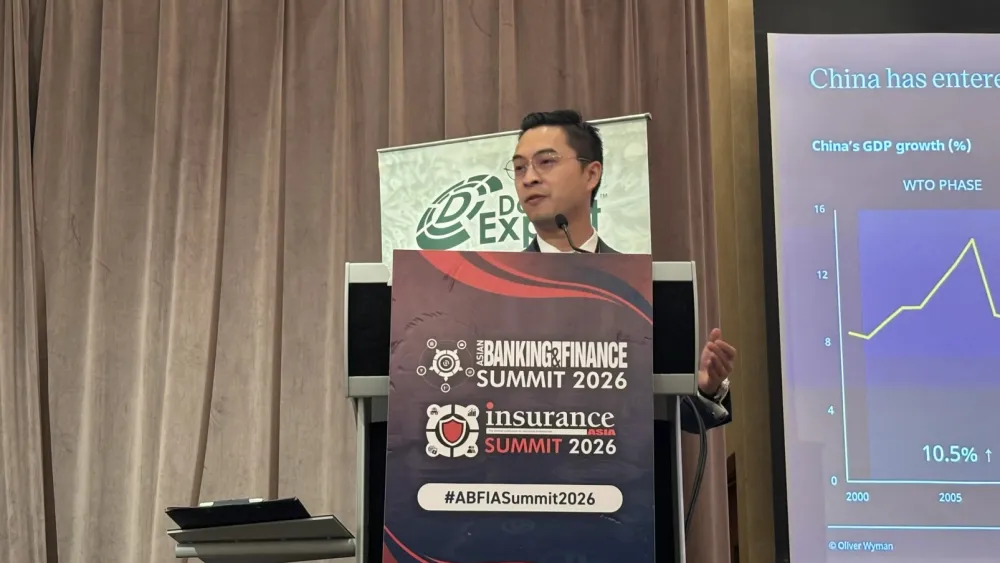
In my view, Singapore’s life insurance industry is entering a phase where sustainable, profitable growth will be more important than premium growth alone. As premium growth moderates in 2027, insurers must focus on product innovation, disciplined risk management and stronger operational efficiency to maintain profitability and long-term competitiveness.
With an ageing population and increasing demand for retirement income, long-term care and investment-linked products, insurers have significant opportunities to develop solutions that address evolving customer needs. However, growth strategies must be supported by prudent underwriting, effective capital management and a balanced product portfolio rather than relying solely on higher premium volumes.
Rising healthcare claims present another critical challenge. Insurers need to work more closely with healthcare providers, regulators and policyholders to improve cost transparency, promote preventive healthcare and encourage more efficient use of medical services. Greater use of data analytics and artificial intelligence can help identify claims trends, detect potential fraud and improve claims assessment. At the same time, insurers should review product design, co-payment structures and provider networks carefully to manage costs without compromising essential coverage or making protection unaffordable. Any changes must strike a fair balance between affordability, adequate benefits and the long-term sustainability of insurance pools.
On investment returns, insurers should avoid pursuing higher yields at the expense of financial resilience. While diversification into equities, private credit, infrastructure and real estate may offer opportunities, such allocations must be supported by rigorous risk assessment, appropriate liquidity buffers and clear investment limits. Asset-liability matching, stress testing and prudent duration management are particularly important in an environment of fluctuating interest rates and market volatility. Insurers must also ensure that investment strategies reflect the guarantees, liquidity needs and risk profiles of their respective liabilities and products.
Ultimately, the future success of Singapore’s life insurers will depend on their ability to balance growth, affordability and financial strength. Insurers that combine customer-centric product development, technology-driven efficiency, disciplined claims management and prudent investment governance will be better positioned to sustain profitability, protect policyholders and build long-term confidence in the industry.