
How are business interruptions driving insurance losses higher?
Supply chain disruptions cost companies an average of $184m a year.
Business interruption, supply chain disruption, and lengthy recovery periods are becoming bigger drivers of insurance losses in the Asia-Pacific region than the initial physical damage from a disaster, according to Tokio Marine Kiln Group Ltd. (TMK).
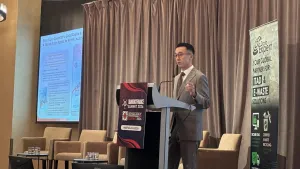
“Twenty years ago, major claims were primarily about repairing physical damage,” Sugenthran Ramasamy, head of claims for Asia at TMK, said in an October report. “Today, the bigger challenge is often restoring operations and how quickly a business can recover, which increasingly determines the ultimate cost of a loss.”
Business interruption, labour shortages, and supply chain delays can increase losses long after physical damage has been repaired, according to the report.
TMK said businesses are increasingly dependent on interconnected technology systems and supply chains, creating risks that might not become apparent until a disruption occurs.
The Japanese insurer said repeated disasters, industrial concentration, and interconnected supply chains are also complicating efforts to assess catastrophe exposure and accumulated losses.
The 2011 Thailand floods showed how a localised disaster could disrupt global industries when key manufacturers and suppliers are concentrated in one location, TMK said.
The trend extends beyond natural catastrophes. TMK said the 2024 CrowdStrike outage showed how operational disruption could spread across industries and countries even without physical damage.
Business interruption ranked as the top business risk in the Asia-Pacific region in Allianz SE's 2025 Risk Barometer report. Allianz estimated business interruption could account for as much as 70% of total catastrophe losses, whilst supply chain disruptions cost businesses an average of $184m a year.
It also cited Cyclone Gabrielle in New Zealand, where labour shortages, material constraints, and extended restoration periods continued to increase claim costs after the disaster.
TMK said insurers and businesses should look beyond physical damage and assess how quickly operations could recover after a disruption.
Questions to ponder:
- Are businesses paying enough attention to recovery risks after disasters?
- How can companies reduce losses from supply chain disruptions?
- How should insurers assess losses when business interruption exceeds physical damage?



















 Read Here
 Advertise
 Sign Up




EXPERT OPINION
The insurance market is not yet giving sufficient attention to post-disaster recovery risk, owing to material uncertainty around exposures, supply chain dependencies, recovery periods and other interdependencies. Insurers can better anticipate supply chain disruption by strengthening supply chain resilience through supplier diversification, and by stress testing key risk drivers to quantify uncertainty. These insights should inform appropriate risk controls, including reinsurance protection, caps on coverage limits and sub-limits, and the introduction of waiting periods. Where business interruption losses arise, insurers should rigorously assess the claim against the policy terms to confirm that coverage applies. They should also engage loss adjusters and specialists to determine the quantum and relevance of the losses, together with any related third-party recoveries, and pursue mitigation measures to limit further loss following the event.