Insurance growth strains trust at claims stage
Claims delays reshape customer loyalty patterns in Indonesia insurance sector.
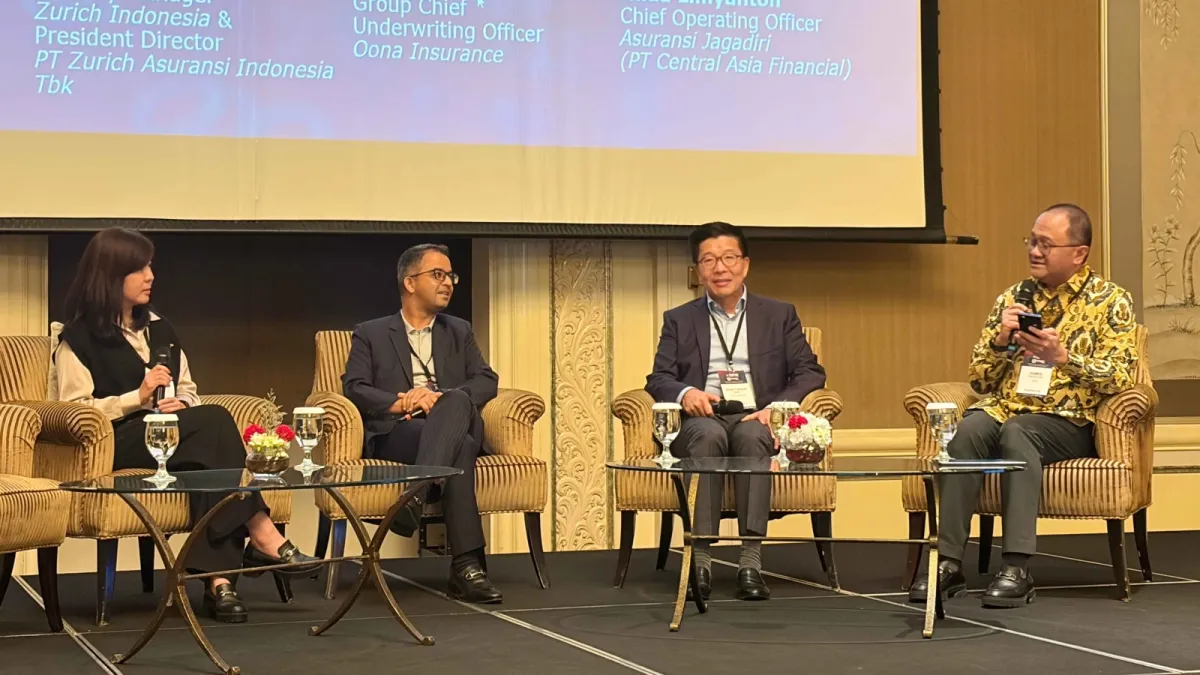
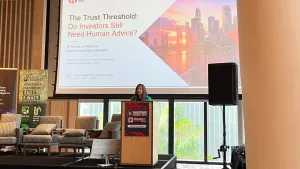
Insurance growth in Indonesia is being shaped by trust at the claims stage, product simplification, and digital distribution shifts, industry executives said at the Asian Banking & Finance and Insurance Asia Summit 2026 in Indonesia.
Kames Natakusumah, head of Indonesia at WTW, said uncertainty in global and emerging risks is increasing pressure on insurers to adapt, humouring attendees that “fighting aliens” cannot be insured.
Natakusumah opened the discussion around digitalisation, simplicity, and customer trust as core industry priorities.
Hilda Limyanton, chief operating officer of Asuransi Jagadiri (PT Central Asia Financial), said trust is built through claims experience and continuous communication with customers.
“We usually say the claims process is where trust is revealed and loyalty is built,” she said.
Insurers must improve engagement after policy sales. “Previously, once a policy was closed, we often kept the customer silent. Now, we need to communicate more and educate them about the products they have purchased,” Limyanton said.
She said insurers are increasing transparency in claims processing, emphasising the importance of notifying customers in this area, and adding that firms are introducing conversational artificial intelligence to handle customer queries.
Edhi Tjahja Negara, country manager of Zurich Indonesia, said trust depends on governance and clarity of coverage.
“Trust is not built by branding alone. It should be built through transparent processes, strong governance, and consistent delivery,” he told attendees.
Product understanding is also central to adoption. “When a customer truly understands what is covered and how it works, protection becomes meaningful rather than intimidating,” Negara said.
Manik Bucha, group chief underwriting officer at Oona Insurance, said market conditions in Southeast Asia are driving demand for simplified products.
“The Southeast Asian market is at an inflection point,” Bucha said. “Indonesia is already at this stage. Previously, customers were busy building assets; now, they need to protect them.”
He said insurers must adapt product design to consumer needs. “We must unbundle products and look at the day-to-day lives of consumers,” he added.
The panel said insurance penetration in Indonesia remains below 10%, with growth challenges outside major cities.
Negara said expansion beyond Jakarta requires simpler products and wider distribution. “Indonesia is not just Jakarta,” he said. “In the coming years, secondary cities will play a major role.”
Limyanton said insurers are shifting towards digital channels and ecosystem partnerships. “We are moving away from only selling through financial partnerships and toward a larger market pool through e-commerce and other ecosystems,” she said.
On emerging risks, Limyanton said insurers are assessing new diseases and claim definitions. “We need to be faster in determining whether these are included or excluded in policies,” she said.
Bucha said health events have increased awareness of insurance demand. “COVID-19 fundamentally changed how people perceive health insurance,” he said.
The panel also discussed electric vehicle adoption and claims exposure, with Negara stating that insurers are still applying traditional underwriting models to electric vehicles (EVs).
“We are on a learning curve,” he said. “We see that claim ratios on some EVs are higher compared with ICE vehicles.”
Bucha said insurers must adjust underwriting to reflect new risks. “EVs are the future, and insurers must adapt by underwriting them effectively rather than staying away,” he said.
Limyanton said digital health and wellness programmes are being used to manage risk and pricing. “We can use that data to create tailor-made pricing for them,” she said.
The panel concluded that insurers are prioritising digitalisation, product simplification, and customer trust as the industry responds to shifting risk and distribution dynamics.

















 Read Here
 Advertise
 Sign Up