Asia insurers risk share loss as product edge fades
Joshi said seven or eight insurers now often compete with similar products.
Insurers risk losing market share if they continue to prioritise product innovation over technology modernisation as insurance products become increasingly commoditised.
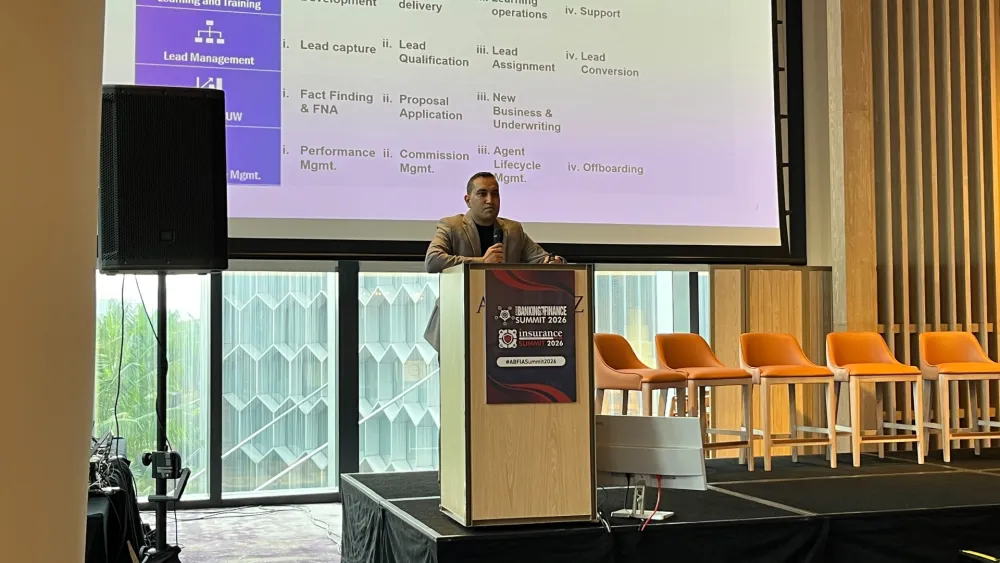
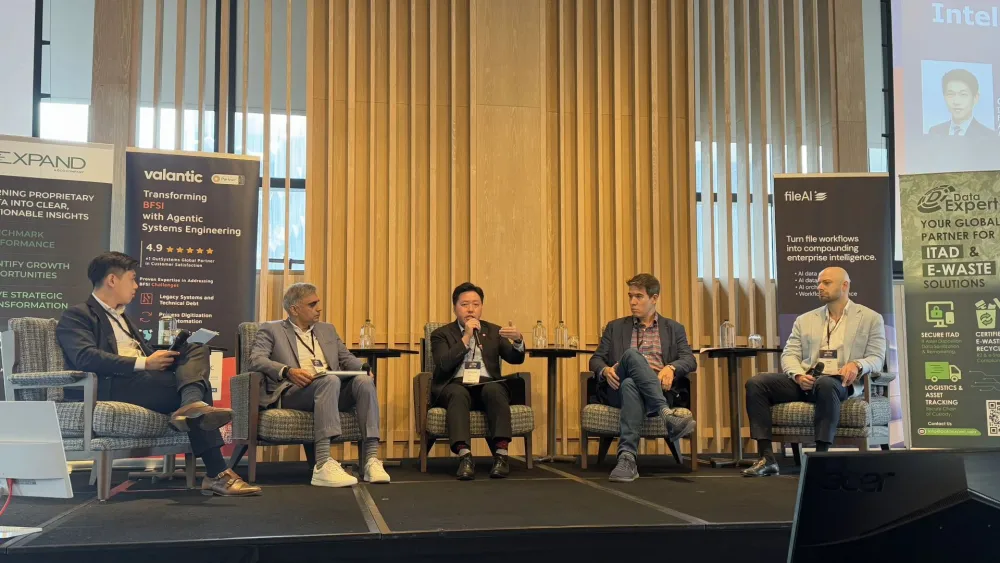
“The insurance battles are no longer won or lost on products,” Konark Joshi, Director, Insurance Strategy & Operations Transformation Advisory, KPMG, told attendees of the Asian Banking & Finance and Insurance Asia Summit in Singapore on 1 July.
“When your margins are thin, when seven or eight insurers have similar products, where do you win? That's where the battles are currently won, or again lost, around distribution. You have quality agents, you have an upper hand," Joshi said.
Whilst artificial intelligence dominates boardroom discussions today, Joshi cautioned that many organisations remain unclear about the business problems they are trying to solve.
“Every boardroom you go, every meeting you attend is about AI. Everyone tries to fix something with AI. No one knows what to fix, usually,” Joshi said. “Very few have started actually doing it,"
Joshi pointed to Singapore's fast-growing Index Universal Life (IUL) segment as an example.
Whilst Manulife pioneered the offering in Singapore roughly a decade ago, there are now 11 insurers offering broadly similar products, making distribution capability the primary competitive differentiator rather than product design.
He compared the insurance sector's challenge to Amazon's retail strategy.
“Amazon won, not based on products. What they did differently is they didn't focus on the product; they focused on distribution. And they built an ecosystem around it,” he said. “The future belongs to ecosystem. How do you orchestrate your capability? It's where you will win or lose,"
The shift is becoming increasingly relevant as Asia's wealth base expands.
According to the Swiss Re Institute, Asia-Pacific accounts for around 30% of global high-net-worth financial wealth, whilst insurers and brokers interviewed by the reinsurer expect the region's high-net-worth insurance market to grow by 10% to 20% over the next two to five years, supported by rising wealth creation and demand for legacy planning solutions.
Joshi said Singapore is already benefiting from this trend as more family offices establish operations in Singapore.
“Roughly about 10% to 12% of the total high-net-worth business flows back into insurance, so it's still quite substantial—the billions flowing in Singapore alone,” he said, adding that insurers including Manulife, Sun Life, AIA and Swiss Life have benefited from growing cross-border demand.
Another structural challenge is the widening gap between customer expectations and insurers' legacy operating models.
Consumers can open a bank account within minutes through digital banking platforms, Joshi noted, whilst relatively simple insurance servicing requests can still take days or weeks.
“Those who are in Singapore, they know you can open an account in DBS or UOB in 10 to 15 minutes. Then if you have to change the beneficiary in insurance, it takes a week, two weeks. It's something fundamentally broken,” he said.
At the same time, insurers continue to struggle with declining productivity despite stable agency headcounts.
Joshi cited one unnamed top-three insurer whose agency force remains around 2,800 to 3,000 agents, yet approximately 40% of newly recruited advisers leave within two years because firms prioritise recruitment over capability building.
“The solution is not just hiring more inorganic agents,” he said. “You're not building capability, you're just hiring people," Instead, insurers should focus on developing new advisers through structured onboarding, training and digital support during the critical first 90 days, he added.
Looking ahead, Joshi expects insurers that modernise distribution, strengthen workforce capabilities and establish robust data infrastructure to outperform competitors as product cycles accelerate.
“Currently, it takes six to eight months to launch an insurance product,” he said. “AI will help to do it within two weeks, four weeks, eventually. Product cycle will become faster, then you have to enable your underwriting, claims, everyone along the way,"





















 Read Here
 Advertise
 Sign Up