Vietnam banks leverage data, AI, and digital trust to capture customers
Timo and HD Bank focus on engagement, analytics, and AI to differentiate in a crowded market.
Vietnam’s digital banking sector is increasingly focusing on customer engagement, data-driven insights, and digital trust to compete in a market of 110 million people with roughly 50 banking apps.
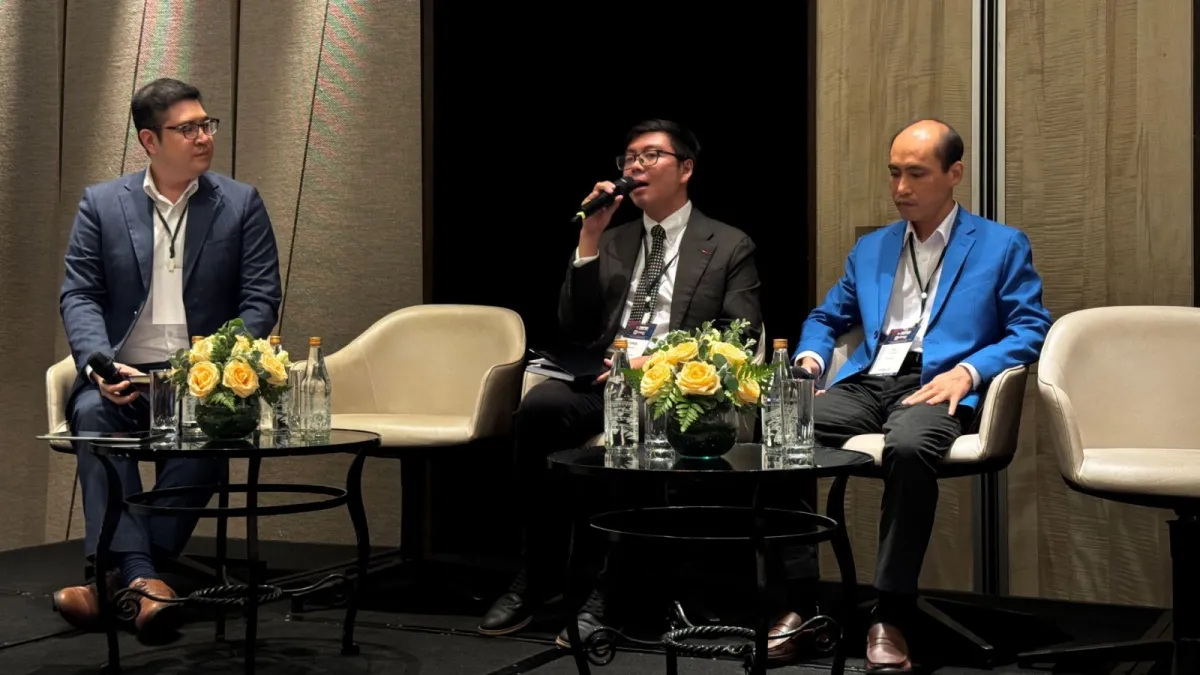
At the Asian Banking & Finance and Insurance Asia Summit – Vietnam, executives from digital bank Timo and HDBank shared how they are targeting customers and leveraging technology to differentiate their offerings.
Chris Nguyen, head of Commercial and Business Analysis at Timo, said the bank focuses on 25-to-35-year-olds entering serious relationships or starting families.
“We capture our customers when they start to think about shared family finance,” he told attendees at the New World Hotel in Ho Chi Minh.
Timo’s approach often begins with one partner joining, then inviting the other to share the account and manage finances together.
At HDBank, executives serve both mass-market and high-net-worth clients.
Bui Thanh Tu, head of Value Proposition and Digital Innovation, said the bank leverages its ecosystem, including Vietjet, to acquire customers.
“We identify potential customer segments and use them for programs like loans or other services,” he said, noting that the bank has also established priority banking centres to serve high-net-worth clients.
Data is central to both banks’ strategies.
Bui said HDBank analyses spending patterns and hobbies to guide product offerings. “Spending is the most important factor for offering services, and we also look at hobbies to guide product recommendations,” he said.
Nguyen explained that Timo’s shared money pot provides detailed household data, which the bank uses for dashboards, personalised content, engagement, and credit scoring.
AI and machine learning are applied first to back-end operations before being deployed in apps. Bui said, “We use chatbots and AI to collect market information and support transactions on the mobile app.”
At Timo, AI is embedded in products to help categorise spending and provide contextual insights to customers.
Speed to market is also a priority for both banks.
Nguyen said, “We can embed a digital insurance product from a partner in under two months.” He added that changes in regulatory requirements can slow the process, giving a recent Ministry of Health decision requiring insurers to resubmit products, suspending some life insurance offerings for six months as an example.
Trust also remains a key component of digital insurance, according to the experts
“Customers often go through the sales journey five to 10 times before making a decision,” Nguyen said.
For high-net-worth clients, HDBank combines digital tools with human support.
Bui said digital tools complement premium services, and agents respond directly through the app when support is needed, with priority clients receiving personalised app experiences alongside access to benefits such as VIP lounges.
Executives concluded that competing in Vietnam’s digital banking market requires more than functional apps. Success depends on combining customer-centric strategy, rich data insights, AI capabilities, operational efficiency, and trust to deliver integrated services across the consumer lifecycle.
Timo and HD Bank are using data, AI, and digital tools to engage customers, build trust, and deliver personalised banking in Vietnam’s crowded market.























 Read Here
 Advertise
 Sign Up