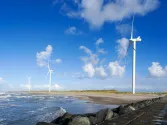
How can insurers keep up with the clean energy boom?
About $165b in clean energy assets face rising climate exposure.
Parametric insurance, or insurance that pays out based on weather conditions, is gaining traction in Southeast Asia’s renewable energy sector as climate hazards intensify and gaps in traditional coverage widen.
“What we have seen in the last two to three years is that capacity has shrunk quite a bit, especially in traditional markets,” WeeBeng Seow, S&P Global Inc.’s head of Southeast Asia for Descartes Underwriting SAS, said in a report published 3 June. “Even if there is capacity available, there are a lot of gaps.”
About $165b in renewable energy assets across the region face exposure to climate-related risks, with insurers pointing to limits in conventional coverage.
Weather-linked insurance pays out when predefined conditions such as rainfall, wind speed or temperature thresholds are met, rather than requiring physical damage assessments. It is increasingly used to cover revenue loss and business interruption in renewable energy projects.
A Zurich Insurance Group Ltd. report on 10 June found that 75% of Southeast Asia’s future renewable energy capacity could face severe climate exposure by 2030.
The study assessed 1,380 existing and planned renewable energy sites across ASEAN, excluding Timor-Leste.
“Southeast Asia has a clear opportunity to protect the value of its clean energy transition before losses materialise,” Mark Fletcher, head of Zurich Resilience Solutions for the Asia-Pacific region at Zurich Insurance Group Ltd., said in the report.
Zurich estimated that investing in resilience could help avoid as much as $82b in losses. It added that about $13b in upfront measures could reduce exposure by as much as 50%, delivering a return of about 6.5 times initial investment.
ASEAN countries aim to raise renewables’ share of installed power capacity to 45% by 2030, up from 33% now.
Meeting that target would require clean energy investment of about $190b by 2035, roughly five times 2026 levels.
Solar assets carry the biggest near-term exposure, with 80% of 731 assessed sites expected to fall into the two highest risk categories by 2030.
Zurich said resilience planning should be built into project design early, rather than added after losses occur.
Questions to ponder:
- Will weather-linked insurance become core infrastructure for renewable financing or remain a niche product?
- Can Southeast Asia scale climate resilience fast enough to match its renewable buildout?

























 Read Here
 Advertise
 Sign Up