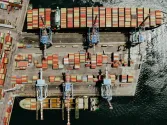
Why AI data centres outpace insurance capacity as site costs hit $20b
Reinsurance markets fail to match surging multi-billion dollar construction limits.
Insurers are facing a growing challenge as artificial intelligence (AI)-driven data centres become larger, more expensive and more complex to cover, according to a new Swiss Re report.
Construction costs for a single site can reach $20b, and the value can double once GPUs and other technology are installed, pushing up the amount of insurance needed for one location.
The report says this is creating pressure on insurers because financing for these projects often requires cover for the full construction value, even though the reinsurance market may only be able to support part of that limit at competitive prices.
Demand for data centre insurance is rising fast, with global premiums expected to increase to $24.2b by 2030 from $10.6b.
Swiss Re says the risk is not just about the size of the buildings, but also where they are being built. In the US, more than a quarter of data centre capacity may be in areas that see at least three large-hail days a year.
Around 40% could be in zones with at least three EF1 or stronger tornado days a year.
For insurers, that raises the chance of large losses from one event, especially where several data centres are clustered in the same region.
The report also points to fire as a major insurance concern. Based on FM data covering the past 15 years, fire accounted for 10.9% of loss events but 42.3% of loss costs in traditional data centres.
Swiss Re says newer facilities may face added fire risk because lithium-ion battery backup units are now being built into server racks, creating a source of ignition inside data rooms.
Water damage is another issue insurers are watching more closely. Swiss Re says liquid-related losses made up nearly 24% of total data centre loss costs in FM’s 15-year review.
Fire-related sprinkler leakage accounted for 9.3% of loss costs, whilst another 10% came from escaped liquid damage linked to newer cooling systems.
As AI servers run hotter and use more direct-to-chip liquid cooling, the report says the risk of leaks, installation errors and maintenance failures is increasing.
Business interruption is also a key exposure. The report says power supply is the biggest driver of data centre outages, accounting for 45% of them, based on Uptime Institute survey data.
AI servers can need more than 100 kilowatts per rack, compared with 5 to 15 kilowatts for traditional servers, which is pushing developers to add on-site power generation and battery storage.
Swiss Re says that creates new insurance concerns around fire, explosion and toxic gas risks.
Another problem for insurers is accumulation risk. Swiss Re says large data centres are sometimes insured through separate programmes for buildings, equipment and power systems, making it harder to track the full exposure.
One event could trigger multiple claims across several policies, whilst shared systems such as power, cooling and fire protection can cause losses for several tenants at the same time.























 Read Here
 Advertise
 Sign Up