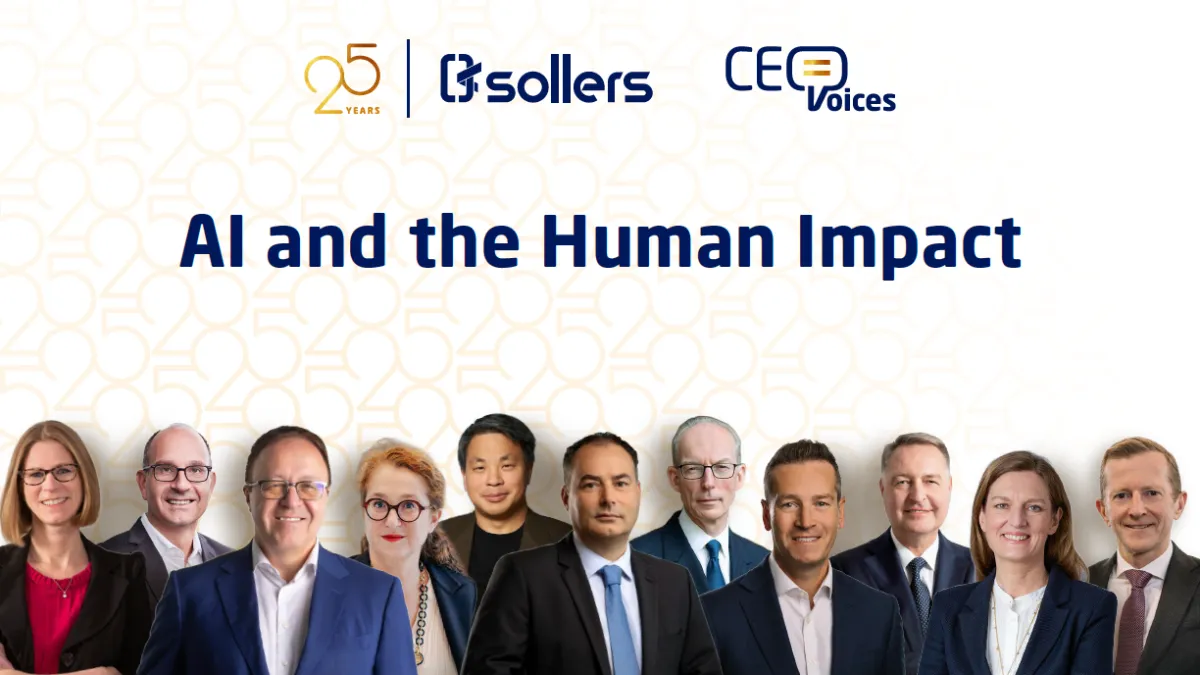
AI will reshape insurance but cannot replace empathy: CEOs
It is improving efficiency and should not erode personalisation and face-to-face interactions.
Artificial intelligence (AI) is the most influential technology shaping the insurance industry, according to a survey of CEOs by Sollers.
AI changes how insurers work with people, 11 insurance CEOs told the consulting agency. They emphasize its impact across the entire insurance value chain, from underwriting and pricing to claims handling and customer service.
In terms of efficiency, it has improved processing of unstructured data, said Michal Trochimczuk, Sollers president and co-founder.
“Cost control will be the key to competitiveness. This means investing in automation, simplified standard architectures, modern rating systems and intelligent risk selection,” Trochimczuk said.
The CEOs stressed that AI should enhance, not erode, empathy, personalization, and face-to-face interaction, the study said.
AI is expected to become embedded in every aspect of insurance, Sollers said. These include pricing engines and product design, claims automation, customer interaction, and risk management.
CEOs interviewed were: Frank Walthes (CEO of VKB, Germany), Andrew Horton (CEO of QBE, Australia), Simon Wilson (CEO of Markel Insurance, USA), Jean-Daniel Laffely (CEO of La Vaudoise, Switzerland), Ken Norgrove (CEO of Intact UK&I), Marcus Ryu (Battery Ventures, USA), Isabelle Le Bot (CEO of La France Mutualiste, France), Agnès Paquin (CEO of CNP Assurances, France), Andrej Slapar (CEO of Triglav, Slovenia), Dr. Jürg Schiltknecht (CEO of Helvetia Germany) and Brenda Gibson (CEO of Red River Mutual, Canada).




















 Read Here
 Advertise
 Sign Up