Medical tourism: Why India feels like the natural choice for NRIs seeking care
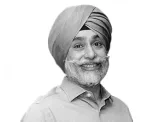
By Sarbvir SinghIndia is offering a healthcare safety net that fits right into the global lifestyle of NRIs.
For the global non-resident Indian (NRI), a ‘trip back home’ has been a well-trodden path paved with reunions and nostalgia. Only now, there are newer and far more practical reasons to visit - their health.
With the rising healthcare inflation and growing access, healthcare is becoming transnational and popularly taking the shape of medical tourism. This homecoming for healthcare is a deliberate choice to find healthcare solutions in a country that is offering more value and comfort at a lower cost.
It is about getting top-tier medical care by highly skilled professionals and a coming-of-age healthcare system.
The numbers vouch for it too. India’s medical tourism sector was valued at $2.89b in 2020 and is projected to reach $13b by 2026, according to the Ministry of Tourism. It could be attributed to factors such as competitive costs, world-class medical facilities, culturally attuned care, and family-based logistics.
But beyond the obvious cost factor, India is offering a healthcare safety net that fits right into the global lifestyle of NRIs.
The compelling economics of care
Consider this: a standard cardiac bypass surgery in the United States could have you shelling out a staggering $120,000. In a top-tier, accredited Indian hospital, you're looking at something closer to $7,000.
Need a new knee? That'll be around $35,000 in the US, but in India, it can be done for about $6,000. Something as basic as a root canal also costs significantly higher when compared against the cost of Indian medical care.
Even after factoring in airfare, recovery stays, and a caregiver’s costs, the savings are substantial. If you are wondering why, it is a result of what economists call factor costs.
This means lower operational expenses, more affordable yet skilled medical talent, and a domestic pharmaceutical industry that produces medicines at a fraction of the Western price. Not to forget, high patient volumes actually bring down unit costs.
Convenience like none other
For NRIs living in countries with high deductibles and long waiting times, especially the US, Canada or the United Kingdom, India represents a well-oiled, private healthcare machine that delivers quality care without the logistical friction.
Take the example of Priya, a 42-year-old IT consultant based in Canada. Faced with a month-long waiting list for a gallbladder surgery under the public healthcare system, she flew to Chennai and had the procedure done within a week at one-fifth the cost and with her parents beside her during recovery.
Moreover, with the emergence of 100% cashless health insurance policies tailored for NRIs, the financial and operational barriers are even lower.
State-of-the-art facilities and top-notch care in a familiar environment
Many of the country's most sought-after surgeons and specialists have already either trained or worked extensively in the US, UK, or Europe. They bring back not just degrees, but a deep understanding of global best practices and patient care protocols.
This expertise is now placed in hospitals that look and feel like their counterparts in any major Western city. Prestigious names in Delhi, Mumbai, Chennai, and Bangalore are routinely accredited by international bodies.
This means they are held to the same rigorous standards for patient safety, clinical outcomes, and quality control as hospitals in New York or London.
The tandem of healthcare and health insurance
The insurance industry has also adapted to this shift. Products are now being designed with NRIs in mind.
There are cashless hospital networks across cities, plans that cover pre-existing conditions, outpatient department benefits for follow-ups, and portability features to shift coverage across cities or even within family members. There has been a steady increase in NRI policyholders, particularly from the Middle East, the US, and Southeast Asia in recent times.
Also, the ecosystem of hospitals, third-party administrators (TPAs), and health-tech platforms has matured. Today, an NRI can research policies online, verify hospital networks, buy a plan digitally, and coordinate care for a family member - all remotely.
Not to forget, the 18% goods and service tax refund just makes it more lucrative. This integrated approach is especially appealing for working professionals who may not have the bandwidth to manage complex claim procedures from abroad.
The government’s “Heal in India” initiative is also actively pushing to make the country a seamless and attractive hub for medical travellers. From streamlining medical visas to easing health insurance processes, India is doubling down on its strengths.
Beyond numbers, healthcare is deeply personal. NRIs also often return to India for emotional comfort and being treated in familiar environments.
India is precisely offering that perfect balance to them.






















 Read Here
 Advertise
 Sign Up