How will the Middle East war drive cyber insurance demand?
Geopolitical tensions are spilling into the digital realm.
Rising tensions in the Middle East are beginning to ripple through the insurance market, with cyber insurance expected to see the strongest jump in demand as geopolitical risks intensify.
A third-quarter 2025 poll by GlobalData Plc found that 27.4% of insurance professionals expect cyber coverage to record the biggest increase in demand if geopolitical instability worsens.
That places cyber insurance ahead of political risk coverage at 25%, supply chain insurance at 23.8%, and business interruption insurance at 13.1%.
GlobalData Insurance Analyst Charlie Hutcherson said geopolitical conflicts are increasingly shaping how companies assess cyber threats, particularly as tensions spill into the digital realm.
“Geopolitical flashpoints are increasingly being priced not just through marine war-risk and political risk lines, but through expectations of cyber escalation,” he said in a March report.
Businesses are growing more concerned that cyberattacks could accompany physical disruptions to global trade. State-backed hacking campaigns, attacks on critical infrastructure, and digital espionage are often linked to geopolitical disputes, making cyber protection a growing priority for companies operating across borders.
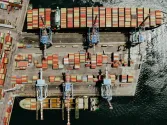
At the same time, the conflict involving the US, Israel and Iran is already affecting marine insurance markets, particularly around the Strait of Hormuz, a strategic waterway that carries roughly one-fifth of the world’s seaborne oil and gas shipments, according to S&P Global Market Intelligence LLC.
Ships planning to pass through the strait are finding it increasingly difficult to secure hull war-risk insurance as the conflict escalates. The US and Israel launched an air campaign against Iran on Feb. 28, prompting retaliatory missile and drone strikes targeting military assets and energy infrastructure across the Persian Gulf.
David Smith, head of marine at insurance broker McGill & Partners, said insurers have become cautious about covering vessels that plan to transit the strait.
“If you went to the hull market right now and said, ‘I’ve got a tanker going through the Strait of Hormuz,’ there is a possibility you would struggle to find underwriters willing to write that,” he said in the report.
Iran has threatened to close the strait and target ships attempting to pass through it. Whilst few vessels have come under direct attack, some analysts say insurance restrictions alone are already discouraging shipping traffic.
Bilal Bassiouni, head of risk forecasting at Pangea-Risk, said in the report the strait is effectively closed from an insurance perspective because many insurers have suspended coverage for vessels entering the area.
For ships entering the Persian Gulf without crossing the strait, war-risk premiums have risen sharply. Hull war cover can now cost as much as 1% of a vessel’s value for seven days of protection, compared with roughly 0.25% before the war.
Hutcherson said marine insurers are reviewing their exposure to key shipping lanes and energy corridors, but they must also prepare for cyber threats linked to geopolitical tensions that could affect companies far beyond the region.
He said insurers might need to rethink how they price cyber policies, how much risk they are willing to assume and how they manage concentrations of exposure as geopolitical conflicts increasingly blur the line between physical and digital threats.
Questions to ponder:
- How could rising oil and conflict risks reshape insurance pricing?
- How are insurers adjusting coverage amidst Middle East instability?
























 Read Here
 Advertise
 Sign Up